

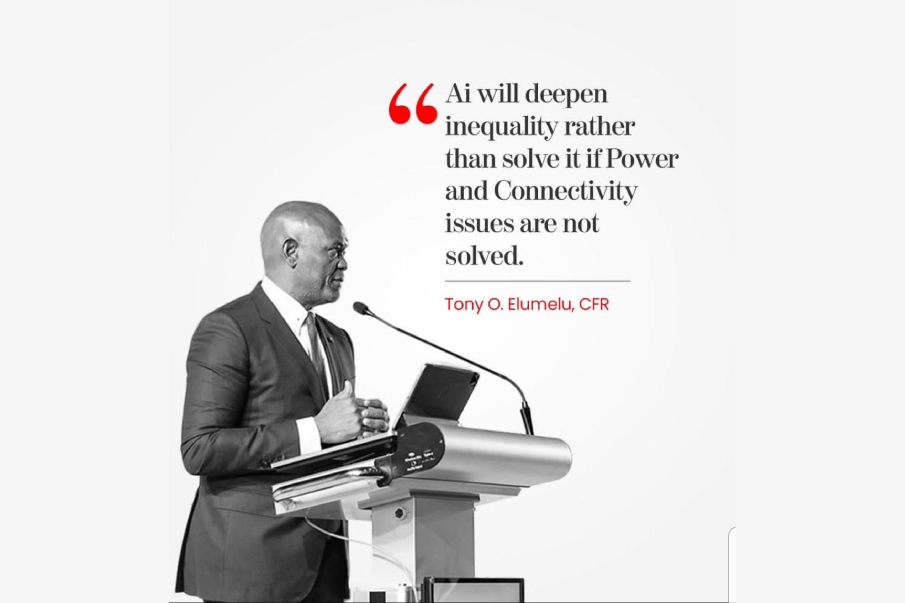
Tony Elumelu once said, “AI will deepen inequality rather than solve it if power and connectivity issues are not solved.”
This statement captures an uncomfortable reality that Africa and much of the developing world must confront as artificial intelligence reshapes economies and industries.
AI has the potential to revolutionize sectors such as agriculture, healthcare, and education. However, these opportunities hinge on one critical foundation: infrastructure. Without reliable power and strong connectivity, the transformative benefits of AI will remain inaccessible to millions, especially in rural communities where the need is greatest.
The Hidden Cost of the Digital Divide
AI depends on vast amounts of data, consistent processing power, and stable network access. Yet in many African regions, power outages and poor internet connectivity are daily obstacles. This technological gap means that while a few benefit from AI-driven progress, the majority risk being left further behind deepening the very inequality innovation was meant to solve.
Agriculture as a Case Study
Take agriculture, for instance. Smallholder farmers produce up to 80% of Africa’s food, yet most lack access to digital tools that could help them forecast weather, manage pests, or optimize irrigation. AI-powered systems can transform yields and resilience but only if the farmers have reliable electricity to power sensors, connectivity to transmit data, and access to platforms that interpret it meaningfully.
At Agrimwendo, we are tackling this gap head-on by integrating IoT devices, AI models, and data analytics into farming systems, while ensuring the technology is built for low-power environments and intermittent connectivity. Our vision is to make AI accessible and practical even in the most remote regions.
The Path Forward: Building Inclusive Infrastructure
To make AI truly inclusive, we must first bridge the infrastructure gap. This includes:
- Investing in renewable energy to power local innovations sustainably.
- Expanding rural internet access through community-based networks and satellite connectivity.
- Designing offline-first applications that continue to function without constant internet access.
- Training local talent to build, maintain, and scale AI solutions tailored to their environments.
Conclusion
AI is not inherently inclusive, it becomes inclusive when access is. If we want AI to uplift rather than divide, then our focus must shift from algorithms to accessibility. Power and connectivity are not just technical issues; they are the building blocks of equity in the digital age.
At Agrimwendo, we believe that the future of AI in Africa will not be defined by code alone, but by connection, collaboration, and community empowerment. Because when everyone has access, AI becomes not just intelligent but transformative.
#AI #Connectivity #Power #Africa #DigitalInclusion #Sustainability #Agriculture #TechForGood